Buying land or building a home involves complex agreements and decisions.
Contract Insights shares short articles explaining common areas of misunderstanding in residential land and building contracts.






Your Building Contract Isn't as Standard as It Looks
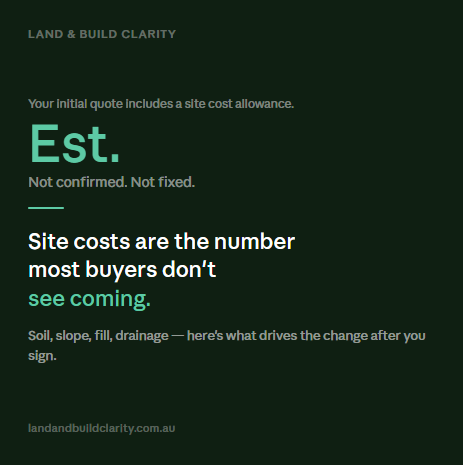
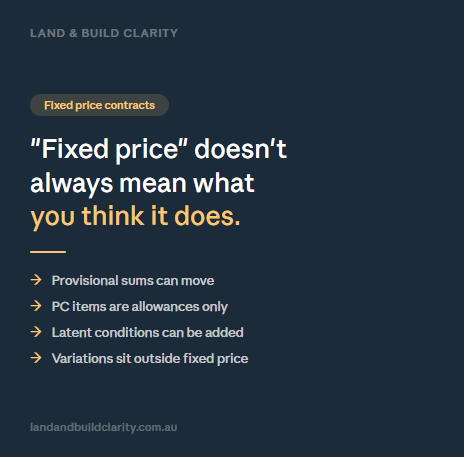
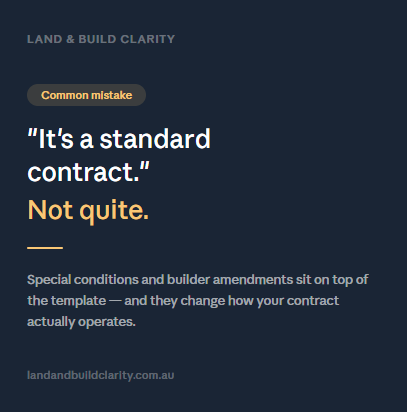
Many residential building contracts in Australia are based on standard templates such as HIA or Master Builders agreements. Because of that, buyers often assume the contract itself is “standard". But most contracts also include special conditions or builder amendments. These additional clauses can adjust how certain parts of the contract operate, particularly around areas such as:• variations • site cost allowances • construction timeframes • payment milestones • extension of time provisions This doesn’t necessarily mean anything is wrong. But it does mean that the final contract may operate differently to the original template. Many buyers understandably focus on the contract price.
In practice, the areas that often matter most sit within the special conditions and amendments. Taking the time to understand how those clauses interact before signing can make a significant difference to the building experience. Clarity before commitment tends to prevent many of the misunderstandings that arise later.

You're Probably Signing Two Contracts. Most Buyers Don't Realise That.
One thing many buyers don’t realise when building a new home is that they are often signing two separate contracts — one for the land and one for the build.
These agreements may relate to the same project, but they usually operate independently — and are often signed at different times.
It’s quite common for the land contract to be signed first, with the building contract following weeks or even months later as design work and finance arrangements progress.
Because the contracts are separate, they can also include different conditions, timeframes and obligations.
Understanding how the two agreements interact before signing can make a significant difference later.
Clarity before commitment helps prevent many of the misunderstandings that arise during the building journey.
For those navigating the process, I’ve also put together a short practical guide outlining key areas worth understanding before signing, available at the Before You Sign.
Unsure about your contract before signing?
An independent review can help you understand risks before committing.
View Contract Review Options